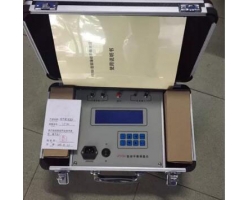

, aiming to introduce the basic concepts, usage scenarios, and importance of this type of transformer.
Installation and Testing of Secondary High-Voltage Test Transformer
Introduction
With the continuous development of the power system, higher requirements have been placed on the safety and reliability of power equipment. As an indispensable part of the power system, high-voltage test transformers play an important role in the detection, maintenance, and commissioning of electrical equipment. This article will provide a detailed introduction to the characteristics, application fields, and usage precautions of the installation and testing of secondary high-voltage test transformers.
I. What is an Installation and Testing of Secondary High-Voltage Test Transformer?
The installation and testing of secondary high-voltage test transformer is a special transformer specifically used for withstand voltage tests on power equipment. Its main function is to generate high voltage during the test process to verify the insulation performance of the tested equipment. According to national power industry standards, installation and testing are divided into different levels, among which the secondary level is suitable for high-voltage equipment testing within a certain range.
II. Characteristics
High voltage output capability: It can stably output high voltages ranging from several kilovolts to tens of kilovolts.
Safety and reliability: It adopts multiple protective measures to ensure the safety of operators and equipment.
Portable design: It is convenient to carry to the site for testing.
High precision: It can accurately measure and display the output voltage value.
Strong adaptability: It is suitable for various types of power equipment testing requirements.
III. Application Scenarios
Withstand voltage test of power transformers: Used to detect the insulation strength of power transformers.
Withstand voltage test of high-voltage cables: Check the insulation performance of high-voltage cables.
Withstand voltage test of switchgear: Evaluate the insulation level of circuit breakers, disconnectors, and other equipment.
Testing of other power equipment: Such as capacitors, instrument transformers, etc.
IV. Usage Precautions
Pre-operation inspection: Ensure all connections are correct and check that the equipment is in good condition.
Safety protection: Operators must wear appropriate personal protective equipment.
Follow procedures: Strictly follow the test procedures to avoid overload operation.
Monitor environmental conditions: Ensure the test environment meets standard requirements, such as temperature, humidity, etc.
Regular calibration: Regularly calibrate the test transformer to ensure the accuracy of measurement results.
Conclusion
The installation and testing of secondary high-voltage test transformer is one of the important tools in the power industry to ensure the safe operation of power equipment. Through correct usage methods and maintenance, the reliability and safety of the power system can be effectively improved. With the development of technology, future high-voltage test transformers will become more intelligent and efficient, better serving the testing work of the power industry.
The above is a basic introduction to the installation and testing of secondary high-voltage test transformers. If you need more technical details or information on specific models, please refer to the relevant manufacturer's manual or consult professionals.