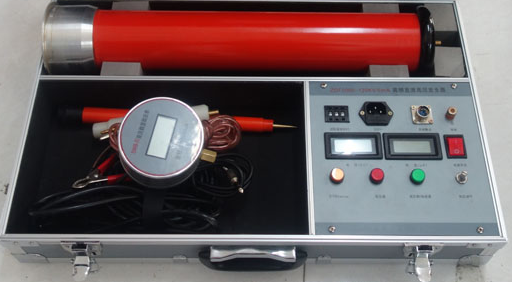

Intelligent DC High Voltage Generator
The intelligent DC high voltage generator adopts a high-frequency voltage doubling circuit, applies new PWM high-frequency pulse width modulation technology, closed-loop adjustment, and uses large voltage feedback to greatly improve voltage stability. According to electromagnetic compatibility theory, special shielding, isolation, and grounding measures are adopted. This makes the DC high voltage generator achieve high quality, portability, and can withstand rated voltage discharge without damage. It is suitable for DC high voltage testing of zinc oxide arresters, magnetic blow arresters, power cables, generators, transformers, switches, and other equipment in power departments, factory and mining enterprise power departments, scientific research units, railways, chemical industry, power plants, etc. It is an ideal new-generation replacement product in the new century.
Safety warnings for use
1. Personnel conducting tests with the DC high voltage tester must be professionals with a "High Voltage Test Work Permit"
2. When using the RTZG-II series DC high voltage generator, users must comply with Article 168 of the "Electric Power Safety Regulations" and install two obvious disconnection points before the working power enters the tester.
3. When DC high voltage is 200kV and above, even if test personnel wear insulating shoes and stay outside the safe distance, due to the influence of high-voltage DC ion distribution, nearby human bodies may carry different DC potentials. Test personnel should not shake hands with each other or touch grounding bodies with hands, otherwise there may be a slight electric shock phenomenon, which generally does not cause harm to people. Cable tests must use current limiting resistors.
4. When discharging large capacitive test objects, do not immediately contact the test object with the discharge rod. Instead, gradually approach the test object with the discharge rod. When the air gap begins to ionize and discharge with a hissing sound at a certain distance, and when there is no sound, use the discharge rod to discharge, then directly discharge to the ground wire.
Maintenance of the instrument
1. If electronic instruments are not used for a long time, they should be powered on for more than 10 minutes each month;
2. When used outdoors for a long time, keep the exterior of the instrument clean;
3. The instrument warehouse should be kept dry and ventilated;
4. Regularly check all dustproof devices. If damage or loose connections are found, handle them promptly to prevent sand and dust from entering and damaging the equipment.