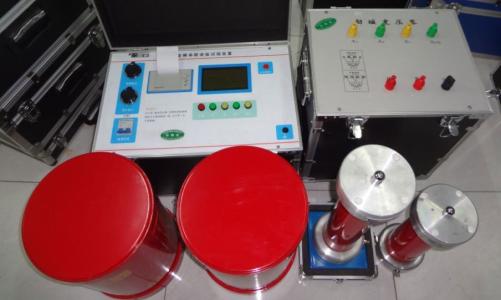

Transformer Partial Discharge Tester is an instrument specifically designed to detect partial discharge phenomena inside transformers in power systems. This type of instrument evaluates the insulation condition of transformers by capturing electromagnetic signals generated by partial discharges. Below is a detailed article about the Transformer Partial Discharge Tester.
Overview of Transformer Partial Discharge Tester
Transformer Partial Discharge Tester is a professional device used to detect partial discharge phenomena inside transformers in power systems. When partial discharge occurs inside a transformer, high-frequency pulse current signals are generated, which can be captured and analyzed by the tester to assess the insulation status of the transformer. This testing is crucial for ensuring the stable operation of the power system.
Working Principle
The working principle of the Transformer Partial Discharge Tester is based on the detection of high-frequency pulse current signals generated by partial discharges. When partial discharge occurs inside a transformer, high-frequency pulse currents are generated. These currents are captured through coupling capacitors (such as partial discharge-free coupling capacitors) and sent to the input unit of the tester. The input unit amplifies these pulse signals through a low-noise preamplifier, then selects the required frequency band through a filter amplifier, and finally amplifies them to an appropriate amplitude through a main amplifier. The amplified signals can be displayed as visible discharge pulses on the oscilloscope screen and simultaneously shown on the pulse peak meter.
Main Features
High Sensitivity: Capable of detecting very weak discharge pulses.
Wide Applicability: Suitable for various types of transformers.
Strong Anti-interference Capability: Utilizes advanced anti-interference technology to operate normally in complex electromagnetic environments.
Multifunctional Display: Typically equipped with a large LCD screen, clearly displaying test waveforms and data.
Data Recording and Analysis: Equipped with data recording functions, capable of saving test results for subsequent analysis.
User-friendly Interface: Simple and intuitive operation, convenient for field technicians.
Usage Method
Connect Equipment: Correctly connect the equipment according to the tester's instructions. Typically, use a BNC-BNC coaxial cable to connect the high-frequency current transformer to the tester's channel.
Host Settings: Turn on the host, select the correct channel, and set the tester parameters, such as selecting the discharge detection mode, setting output voltage and units.
Start Measurement: Activate the auto-ranging function to begin measurement.
Save Data: If it is necessary to save the currently detected discharge signals, use a USB drive for graphical storage.
Turn Off Equipment: After completing the detection, turn off the auto-trigger function and shut down the tester.
Technical Parameters
The technical parameters of the Transformer Partial Discharge Tester may include:
Frequency Response Range: Typically from a few hundred kHz to several MHz.
Sensitivity: Typically between a few picocoulombs (pC) and tens of picocoulombs.
Display Method: Large LCD screen.
Battery Life: Typically capable of continuous operation for several hours.
Weight: Lightweight and portable.
Anti-interference Capability: Capable of operating normally under a certain level of electromagnetic interference.
Application Scenarios
Power Equipment Maintenance: Used for routine inspection and maintenance of power transformers (such as current transformers and voltage transformers).
Fault Diagnosis: When transformers exhibit abnormalities, partial discharge detection is used to diagnose the cause of the fault.
Product Quality Control: Quality control of transformers during the production process to ensure that the insulation performance of factory-shipped equipment meets standards.
Research and Development: Used to evaluate the effectiveness of new insulation materials or structures during the development of new types of transformers.
Conclusion
The Transformer Partial Discharge Tester plays an important role in the power industry due to its reliable detection capability and flexibility. By using such testers, power companies can not only effectively prevent equipment failures but also significantly improve the overall reliability and safety of the power system. With technological advancements, future testers will become more intelligent and portable, further enhancing the efficiency and accuracy of partial discharge detection.
The above is an overview of the Transformer Partial Discharge Tester. I hope this article provides you with relevant information and technical details about the Transformer Partial Discharge Tester. If you need more detailed information or specific case analysis, please feel free to let us know.