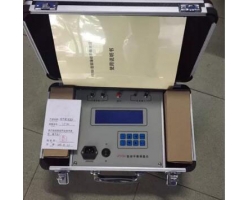

Of course, here is an article about partial discharge detectors, detailing their principles, applications, and importance in power systems:
Partial Discharge Detector: A Key Tool in Power System Maintenance
Overview
Power systems are one of the fundamental infrastructures of modern society, and their reliability and safety are of utmost importance. Partial Discharge (PD) is a common phenomenon in power equipment, especially in high-voltage equipment such as transformers, switchgear, and cable systems. The presence of partial discharge not only reduces the insulation performance of equipment but also leads to premature failure, thereby affecting the stable operation of the entire power system. Therefore, partial discharge detectors, as an important detection method, play a crucial role in the maintenance of power systems.
Partial Discharge and Its Hazards
Partial discharge refers to the discharge phenomenon that occurs in the insulation material of power equipment due to uneven electric field distribution or other factors. This discharge often occurs only in partial areas of the insulation material, rather than penetrating the entire insulation layer. Partial discharge accelerates the aging of insulation materials, reduces insulation performance, and may ultimately lead to complete failure of power equipment. In addition, partial discharge can also cause electromagnetic interference, affecting surrounding electronic equipment.
Working Principle of Partial Discharge Detector
Partial discharge detectors achieve detection by capturing various signals generated by partial discharge, including but not limited to:
Electromagnetic radiation: Partial discharge generates electromagnetic radiation, which can be received by devices such as antennas.
Ultrasonic waves: Partial discharge also generates ultrasonic signals, which can be detected by specialized sensors.
Optical signals: In some cases, partial discharge may produce visible light or ultraviolet rays, which can be detected using photosensitive sensors.
Acoustic signals: Under specific conditions, the sound signals of partial discharge can also be captured.
Main Functions and Features
Non-invasive detection: Partial discharge detectors can perform detection without shutting down equipment, reducing economic losses caused by power outages.
Multiple detection modes: Supports various modes such as electromagnetic radiation detection and ultrasonic detection, improving detection accuracy and reliability.
Precise positioning capability: Through advanced signal processing technology, the location of partial discharge can be precisely identified.
Trend analysis: Capable of conducting long-term trend analysis of partial discharge data, helping to predict the future state of equipment.
Data visualization: Most modern partial discharge detectors are equipped with data visualization functions, making data analysis more intuitive.
Applications in Power Systems
Partial discharge detectors are widely used in various fields of power systems, including:
Transformers: Detecting partial discharge inside transformers to assess insulation status.
Switchgear: Inspecting insulation defects in switchgear to prevent short-circuit accidents.
Cable systems: Monitoring partial discharge activities in cables and terminations to ensure the safety of cable systems.
Generators: Detecting partial discharge in generator windings to prevent insulation aging.
Implementation Steps
Site preparation: Ensure the working environment meets safety standards and wear appropriate personal protective equipment.
Equipment installation: Correctly install the detection instrument according to the equipment type and detection requirements.
Parameter setting: Adjust various parameters of the detector according to the detection target.
Executing detection: Start the detection program and scan along the predetermined route.
Data analysis: Record detection data and use built-in software for analysis.
Report preparation: Based on the analysis results, compile a detailed detection report.
Conclusion
Partial discharge detectors are indispensable tools in power system maintenance. They help power engineers promptly identify potential issues in equipment and take corresponding preventive measures, thereby extending equipment life and ensuring the safe and stable operation of power systems. With technological advancements, future partial discharge detectors will become more intelligent and portable, further improving detection efficiency and accuracy.
I hope this article provides you with a comprehensive understanding of partial discharge detectors. If you have any specific technical questions or need more in-depth discussion, please feel free to ask.