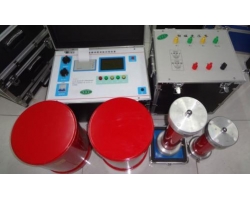

An ultrasonic partial discharge detector is an advanced tool specifically designed to detect partial discharge phenomena in power equipment. By capturing the ultrasonic signals generated by partial discharges, this instrument helps maintenance personnel identify potential fault points in a timely manner, preventing sudden accidents in the power system. This article will provide a detailed introduction to the working principle, technical characteristics, and application scope of the ultrasonic partial discharge detector.
Working Principle
The working principle of the ultrasonic partial discharge detector is based on the ultrasonic signals generated by partial discharges. When partial discharge occurs inside power equipment, a series of physical phenomena are produced both inside the equipment and in the surrounding space, including ultrasonic waves and electromagnetic radiation. The ultrasonic partial discharge detector captures these ultrasonic signals and converts them into audible sound signals that can be heard by the human ear, helping technicians locate and assess the degree of partial discharge.
Technical Characteristics
The main technical characteristics of the ultrasonic partial discharge detector include
Non-contact detection: No need to directly contact live equipment, making it safe and convenient.
Accurate positioning: Can determine the location of partial discharge with relatively high accuracy.
Easy operation: Sensors can be installed at any position on the outer shell of the equipment under test.
Immune to power signal interference: Can perform detection independently of the operating status of the power system.
High sensitivity: Capable of capturing weak ultrasonic signals.
Multi-mode detection: Usually equipped with various sensors, such as ultrasonic sensors, transient earth voltage sensors, ultra-high frequency sensors, etc., enabling detection in multiple modes.
Application Scope
Ultrasonic partial discharge detectors are widely used in various fields of the power system, including but not limited to:
Substations: Detecting partial discharges in GIS (Gas Insulated Switchgear).
Transmission and distribution lines: Inspecting partial discharges in high-voltage cable joints and terminations.
Power transformers: Evaluating the internal insulation condition of transformers.
Switchgear: Detecting partial discharge phenomena inside switchgear cabinets.
Motors and generators: Monitoring partial discharge conditions in motor and generator windings.
Selection Criteria
When selecting an ultrasonic partial discharge detector, the following points should be considered:
Detection frequency range: Choose a product that can cover the target frequency range.
Sensitivity: Ensure the instrument can detect weak ultrasonic signals.
Portability: Consider the weight and size of the instrument for ease of carrying and field operation.
Battery life: Choose an instrument with good battery endurance to support long-duration detection.
Data recording and analysis functions: Confirm whether the instrument has the capability to record detection data and perform subsequent data analysis.
User-friendly interface: Choose an instrument that is simple and intuitive to operate, facilitating quick on-site use.
Conclusion
The ultrasonic partial discharge detector plays an important role in the maintenance of power equipment due to its unique detection principle and technical advantages. By regularly using the ultrasonic partial discharge detector for inspections, it is possible to effectively prevent failures in the power system and ensure the safe and stable operation of power facilities.
Please adjust the content of this article according to your specific needs, and if you require more detailed information or specific data, feel free to let me know.