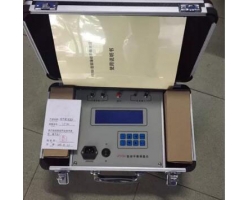

Overview of Ultrasonic Partial Discharge Detector
An ultrasonic partial discharge detector is a portable instrument based on ultrasonic detection technology, mainly used for the maintenance and testing of high-voltage electrical equipment in power systems. When partial discharge occurs inside power equipment, ultrasonic signals with frequencies higher than 20kHz are generated. These signals can propagate to the external environment through gaps, holes, and other openings on the equipment surface. The ultrasonic partial discharge detector can capture and analyze these signals to determine whether partial discharge exists in the equipment and its location.
Working Principle
The working principle of the ultrasonic partial discharge detector is based on the ultrasonic signals generated during partial discharge. When partial discharge occurs inside power equipment, ultrasonic signals with frequencies higher than 20kHz are generated. These ultrasonic signals can propagate to the external environment through gaps, holes, and other openings on the equipment surface and are captured by the detector's sensor. The detector converts these signals into electrical signals, which are then analyzed and displayed by the built-in signal processing unit. In this way, the detector helps workers locate the partial discharge position and assess its severity.
Main Features
Portability: Lightweight design for easy on-site carrying.
High Sensitivity: Capable of detecting very weak discharge pulses.
Strong Anti-interference Capability: Utilizes advanced anti-interference technology to operate normally in complex electromagnetic environments.
Multifunctional Display: Typically equipped with a large LCD screen that clearly displays test waveforms and data.
Data Recording and Analysis: Equipped with data recording functions to save test results for subsequent analysis.
User-friendly Interface: Simple and intuitive operation, convenient for on-site technical personnel.
Positioning Function: Can perform laser positioning, image acquisition, and waveform recording for abnormal points.
Technical Parameters
Technical parameters of the ultrasonic partial discharge detector may include:
Frequency Response Range: Typically 20 kHz - 200 kHz.
Sensitivity: Usually between a few picocoulombs (pC) and tens of picocoulombs.
Display Method: Large LCD screen.
Battery Life: Typically can work continuously for several hours.
Weight: Lightweight and portable.
Anti-interference Capability: Can operate normally under a certain level of electromagnetic interference.
Usage Method
Startup Preparation: Turn on the ultrasonic partial discharge detector.
Calibration: Calibrate the instrument correctly according to the equipment instructions.
Connect Sensor: Correctly connect the ultrasonic sensor to the detector.
Start Testing: Place the sensor at the test location and begin data collection.
Data Analysis: Observe the discharge pulse waveform on the detector's screen and record data.
Data Storage: Store important test results.
Application Scenarios
Power Equipment Maintenance: Used for routine inspection and maintenance of high-voltage equipment such as power transformers, cables, and generators.
Fault Diagnosis: When equipment malfunctions, use partial discharge detection to diagnose the cause of the fault.
Product Quality Control: Conduct quality control on power equipment during the production process to ensure that the insulation performance of factory-outgoing equipment meets standards.
Scientific Research and Development: Used to evaluate the effectiveness of new insulation materials or structures during the development of new power equipment.
Conclusion
The ultrasonic partial discharge detector plays an important role in the power industry due to its reliable detection capability and flexibility. By using such testing instruments, power enterprises can not only effectively prevent equipment failures but also significantly improve the overall reliability and safety of the power system. With technological advancements, future detectors will become more intelligent and portable, further enhancing the efficiency and accuracy of partial discharge detection.
The above is an overview of the ultrasonic partial discharge detector. I hope this article can provide you with relevant information and technical details about the ultrasonic partial discharge detector. If you need more detailed information or specific case analysis, please feel free to let me know.