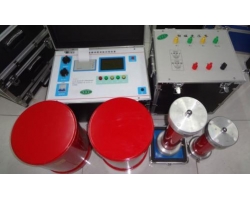

A relay protection tester is a professional instrument used to test the performance of relay protection devices in power systems. This type of instrument can simulate various fault conditions to verify whether relay protection devices respond correctly, ensuring the safe and stable operation of the power system. Below is an overview of an article about relay protection testers.
Relay Protection Tester
Overview
A relay protection tester is a specialized device used to detect and verify the performance of relay protection devices in power systems. It can simulate various faults and abnormal conditions in the power system to ensure that relay protection devices respond correctly when actual faults occur.
Working Principle
The working principle of a relay protection tester is based on simulating the physical quantities involved in relay protection devices in power systems. These physical quantities include current, voltage, frequency, power, etc. Through precise hardware and software control systems, the relay protection tester can generate highly accurate waveform signals to simulate various operating conditions, thereby testing the sensitivity, selectivity, speed, and reliability of protection devices.
Main Functions
Simulated signal generation: Can produce various waveform signals, such as sine waves, square waves, etc.
Fault simulation: Simulates various fault conditions such as short circuits, open circuits, overloads, etc.
Protection function testing: Includes overcurrent protection, undervoltage protection, directional protection, distance protection, etc.
Data analysis: Records and analyzes data during the testing process, providing test reports.
Usage Method
Connect the device: Connect the relay protection tester to the protection device under test according to test requirements.
Set parameters: Set parameters such as voltage and current according to test needs.
Start the test: Start the test program to simulate preset fault conditions.
Data analysis: Observe the response of the protection device and record relevant data.
Generate report: Generate a detailed test report based on the test results.
Common Test Items
DC test: Used to test DC relays.
AC/DC test: Suitable for protection devices that need to test both AC and DC characteristics.
AC test: Tests AC protection devices.
Differential test: Used for differential protection devices.
Differential harmonic test: Tests the response to harmonics in differential protection.
Power impedance, power direction, and impedance tests: Tests related protection functions.
Synchronization test: Used to test synchronization devices.
Precautions
Ensure all connections are correct before use.
Closely monitor the status of the device under test during testing.
Select appropriate test parameters based on the specifications of the device under test.
Follow safety regulations during testing to ensure personal safety.
Conclusion
A relay protection tester is an indispensable tool in the maintenance and commissioning of power systems. It ensures that relay protection devices operate accurately under various conditions. With the development of power systems and technological advancements, the functions of relay protection testers are continuously improving, and they will become more intelligent and multifunctional in the future.
If you need more detailed information or have specific technical questions, please feel free to let us know.