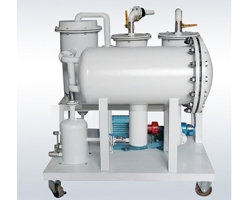

Components
Frequency and voltage regulated power supply: Provides a power supply with variable frequency and voltage.
Excitation transformer: Used to adjust the voltage level, transforming the output voltage of the frequency and voltage regulated power supply to a suitable voltage level.
Reactor: Provides the necessary inductance to form a series resonance with the capacitance of the test object.
High-voltage divider: Used to measure the actual voltage value on the high-voltage side.
Control system: Includes a frequency converter controller and other control components, used to adjust frequency and voltage to ensure safe operation of the device.
Working Principle
Series resonance principle: The inductance (L) of the reactor and the capacitance (C) of the test object form a series resonant circuit. By adjusting the output frequency of the frequency converter controller, the circuit is brought into a resonant state. At this time, the voltage across the reactor and the test object will be much higher than the power supply voltage.
Resonant frequency calculation: Resonant frequency
C is the capacitance value of the test object.
Voltage boosting process: By changing the output frequency of the frequency-regulated power supply, the circuit reaches a resonant state, and then the output voltage of the frequency-regulated power supply is adjusted to achieve the required test voltage on the test object.
Application Scope
High-voltage cables: Used to test the insulation performance of high-voltage cross-linked cables.
Transformers: Test the insulation strength of transformers.
Generators: Conduct AC withstand voltage tests on generators.
Gas-insulated switchgear (GIS): Test the insulation performance of GIS equipment.
Electric motors: Used for AC withstand voltage tests on motors.
Other power equipment: Such as busbars, bushings, transformers, etc., for AC withstand voltage tests.
Usage Method
Preparation stage: Configure the appropriate combination of reactors and voltage dividers based on the capacitance value of the test object.
Connect equipment: Correctly connect each component to ensure the safety and stability of the connecting wires.
Set parameters: Set the output frequency and voltage of the frequency converter controller according to test requirements.
Start test: Start the series resonant device and adjust the frequency through the frequency controller until a resonant state is achieved.
Monitor test: Monitor changes in voltage and current to ensure there are no abnormalities during the test.
End test: After the test is completed, gradually reduce the voltage to zero, then turn off the power.
Precautions
Safety first: Ensure all operations comply with safety regulations.
Professional operation: Should be operated by personnel with professional training.
Environmental factors: Consider the impact of ambient temperature, humidity, etc., on test results.
Equipment maintenance: Regularly maintain and calibrate the series resonant device.
Conclusion
The series resonant device is an important power testing device that can efficiently and safely conduct high-voltage AC withstand voltage tests, which is crucial for ensuring the reliability and safety of the power system.
The above is an overview article about the series resonant device. Specific usage methods and technical details may vary depending on the model and brand of the series resonant device. Before actual operation, please refer to the specific user manual or technical documentation.