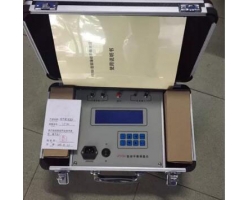

Partial Discharge (PD) is one of the common early fault phenomena in power equipment, especially in high-voltage power transformers. This phenomenon not only accelerates the aging of insulation materials but can also lead to equipment failures or even catastrophic accidents. Therefore, the transformer partial discharge tester has become an indispensable detection tool in the power industry.
Working Principle
The transformer partial discharge tester works by capturing signals such as electromagnetic waves, ultrasonic waves, or ground waves generated by partial discharges inside the transformer. These signals are received by built-in sensors, then amplified and filtered through signal processing circuits, and analyzed using digital signal processing technology. Finally, they are displayed on the screen for user analysis.
Main Features
Multi-channel detection: Supports simultaneous acquisition and analysis of data from multiple signal sources, improving detection flexibility and efficiency.
Digital signal processing: Utilizes advanced digital signal processing technology to improve signal resolution and signal-to-noise ratio.
Intelligent analysis: Built-in intelligent analysis software can automatically identify and analyze partial discharge signals, providing multiple analysis modes such as PRPD (Phase Resolved Partial Discharge), PRPS (Phase Resolved Pulse Sequence), etc.
Real-time display: Detection results can be displayed on the screen in real-time, facilitating on-site decision-making.
Data recording: Capable of storing a large amount of detection data for