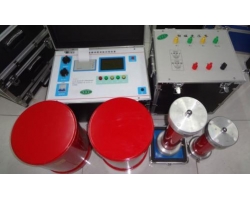

Of course. Below is an outline of an article about the series resonance device, aiming to provide a detailed introduction to the equipment's functions, working principles, application scenarios, and usage methods.
Series Resonance Device: Principles and Applications
1. Introduction
The series resonance test device is a specialized equipment for conducting AC withstand voltage tests on capacitive loads, widely used in testing various high-voltage cross-linked cables, transformers, generators, GIS switches, motors, and other equipment in power systems.
2. Composition and Working Principle
Composition:
Frequency and voltage regulated power supply: used to provide a power source with adjustable frequency and voltage.
Excitation transformer: steps up the output voltage of the frequency and voltage regulated power supply to a working voltage suitable for the reactor and the test object.
High-voltage reactor: forms part of the series resonant circuit with the test object.
Voltage divider: used to measure the test voltage.
Working Principle:
Utilize the power from the frequency and voltage regulated power supply to excite the excitation transformer, raising the voltage to the required level.
By changing the output frequency of the frequency-regulated power supply, the inductance of the reactor in the circuit
L and the capacitance of the test object
C undergo series resonance.
When the test frequency equals the series resonance frequency
, the circuit resonates, and the resonant voltage is the voltage applied to the test object.
In the resonant state, the circuit impedance is minimal, allowing a higher test voltage to be obtained at a lower power supply voltage.
3. Application Scope
High-voltage cross-linked cables: conduct AC withstand voltage tests to detect cable insulation performance.
Transformers: power frequency withstand voltage tests to evaluate transformer insulation performance.
Generators: AC withstand voltage tests to ensure electrical performance of generators.
GIS switches: AC withstand voltage tests to verify insulation reliability of switchgear.
Motors: detect insulation condition of motors.
Busbars, bushings, and instrument transformers: conduct AC withstand voltage tests to ensure electrical performance of these devices.
4. Usage Method
Connection preparation: correctly connect the frequency and voltage regulated power supply, excitation transformer, reactor, and voltage divider.
Parameter setting: set test parameters based on the characteristics of the test object, including test voltage, frequency range, etc.
Start the test: start the frequency and voltage regulated power supply, adjust the frequency until the circuit resonates.
Monitoring process: monitor low-voltage, current, and the output voltage of the high-voltage divider.
Record data: record important data during the test process.
Safe discharge: after the test, perform safe discharge operations to ensure complete release of residual charge in the circuit.
5. Precautions
Safety first: strictly adhere to safety regulations during operation.
Professional operation: should be operated by trained technical personnel.
Regular calibration: regularly calibrate the equipment to ensure measurement accuracy.
Environmental factors: pay attention to environmental conditions, avoid using the equipment under extreme conditions.
6. Conclusion
The series resonance test device is one of the indispensable testing tools in power systems. It effectively improves testing efficiency and safety, making it an ideal choice for AC withstand voltage tests on high-voltage equipment.
The above content provides a comprehensive overview of the series resonance device. If you need more detailed information or in-depth discussion on specific aspects, please let me know.