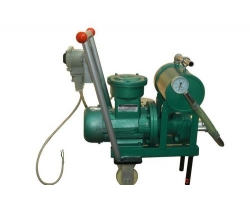

Certainly. Below is an outline of an article about the dielectric loss tester, which will cover its basic concepts, working principle, usage methods, and application fields.
Dielectric Loss Tester: Principle, Usage, and Application
Introduction
The dielectric loss tester is an instrument used to measure the energy loss of dielectric materials in power equipment under the action of AC voltage. This instrument is crucial for assessing the insulation condition of power equipment, as it can reveal the aging degree and potential defects of insulating materials.
Working Principle
The working principle of the dielectric loss tester is based on measuring the electrical energy consumed by the dielectric under AC voltage, which is converted into heat energy causing loss. The specific steps are as follows:
Standard Circuit and Test Circuit:
Standard Circuit: Composed of a built-in high-stability standard capacitor and measurement circuitry.
Test Circuit: Composed of the test object and measurement circuitry.
Measurement Circuitry:
Includes sampling resistors, a preamplifier, and an A/D converter.
The amplitudes and phases of the standard circuit current and the test circuit current are measured separately through the measurement circuit.
Data Processing:
The microcontroller uses digital real-time acquisition methods and vector operations to calculate the capacitance value and dielectric loss tangent (tanδ) of the test object.
Main Functions
The main functions of the dielectric loss tester include:
Capacitance Measurement: Measures the capacitance value of the test object.
Dielectric Loss Tangent Measurement: Measures the dielectric loss tangent (tanδ) of the test object, which is an important indicator for evaluating dielectric quality.
Temperature Compensation: Considering the influence of temperature on dielectric properties, some advanced models have temperature compensation functions.
Usage Methods
Pre-measurement Preparation:
Grounding: Use a grounding wire to reliably connect the instrument to the earth.
Correctly connect the high-voltage cable and the CX low-voltage cable.
Instrument Operation:
Select the appropriate measurement mode based on the type of test object.
Set the test voltage and other relevant parameters.
Start the measurement program.
Reading Data:
After the measurement is completed, read the displayed capacitance value and dielectric loss tangent value.
Precautions:
Ensure the insulation of high-voltage leads and personnel safety.
The instrument must be reliably grounded before use.
Before use, technical personnel should conduct insulation testing on the equipment.
Determine the voltage withstand level of the equipment and correctly select the voltage boosting gear of the tester.
Do not suddenly turn off the power during the test.
Application Fields
Dielectric loss testers are widely used in various fields of the power system, including but not limited to:
Power Transformers: Used to detect the health condition of transformer oil-paper insulation.
Power Cables: Used to detect the quality of cable insulation layers.
Instrument Transformers: Used to detect the insulation performance of voltage transformers and current transformers.
Generators: Used for aging assessment of generator insulation materials.
High-voltage Bushings: Used to detect the insulation performance of high-voltage bushings.
Conclusion
The dielectric loss tester is a key tool in the power system to ensure the insulation condition of power equipment. By regularly testing and maintaining the dielectric loss, it can effectively prevent power system accidents caused by insulation aging or damage, ensuring the safe operation of power facilities.
If you need more detailed information or content on other aspects, please feel free to let me know.