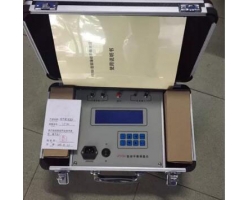

Relay protection tester is an important tool for power system maintenance and fault diagnosis. It can simulate various operating conditions of the power system, test the response characteristics of relays and other protection devices, and ensure that they can operate correctly in actual operation. This article will explore the working principle, key technologies, and applications of relay protection testers in power systems.
1. Introduction
The relay protection system is crucial for ensuring the stable operation of the power system. With the continuous expansion of the power system scale and the advancement of technology, the requirements for relay protection equipment are also increasing. As a professional testing tool, the relay protection tester can help technicians accurately evaluate the performance of relays and ensure the safety and reliability of the power system.
2. Working Principle of Relay Protection Tester
The relay protection tester mainly consists of the following parts:
Signal generator: generates analog current, voltage, and other signals to simulate different power system operating conditions.
Signal processor: processes the generated signals to meet testing requirements.
Output interface: outputs the processed signals to the device under test.
Data acquisition system: collects the response data of the device under test.
Data analysis and display unit: analyzes the collected data and displays the results.
3. Key Technologies
High-precision signal source: can precisely control the amplitude, frequency, and phase of output signals.
High-speed data acquisition: ensures the ability to capture rapidly changing signal characteristics.
Multi-channel synchronous testing: supports simultaneous testing of multiple signals to simulate complex system environments.
Intelligent testing procedures: can automatically execute test sequences based on preset conditions.
Real-time monitoring and fault diagnosis: monitors equipment status during testing and promptly identifies potential issues.
4. Application Fields
Conventional relay testing: tests traditional relays such as overcurrent, undervoltage, and overvoltage relays.
Microcomputer protection device testing: conducts comprehensive tests on microprocessor-based protection devices.
Fault recording analysis: records current and voltage waveforms during system faults to help analyze fault causes.
Power system simulation: simulates the operation of real power systems to evaluate the effectiveness of protection schemes.
Relay protection training: provides a practical training platform for technicians to improve fault diagnosis capabilities.
5. Practical Cases
Case 1: Substation Relay Protection Testing
Background: A substation planned annual maintenance and needed to test all relay protection equipment.
Test content: including overcurrent, undervoltage, differential protection, etc.
Test results: A relay with insufficient sensitivity was found and replaced in time.
Case 2: Optimization of Relay Protection Configuration in a Wind Farm
Background: To improve the reliability of the wind farm, the relay protection system needed to be optimized.
Test content: simulated system operation under different wind speed conditions and tested the operating characteristics of protection devices.
Test results: Based on the test results, the protection configuration was adjusted, significantly improving the stability and availability of the system.
6. Conclusion
The relay protection tester is an important tool for power system maintenance and fault diagnosis. By accurately simulating various operating conditions of the power system, it can effectively evaluate the performance of relays and other protection devices, thereby ensuring the safe and stable operation of the power system. With technological advancements, future relay protection testers will become more intelligent and integrated, better serving the rapid development of the power industry.
This article provides an overview of the basic concepts, key technologies, and practical application scenarios of relay protection testers. We hope this information is helpful to you. If you need more detailed technical materials or other related information, please feel free to let us know.