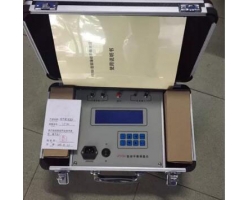

Relay protection is an extremely important part of the power system, responsible for quickly cutting off faulty sections when faults occur, protecting equipment from damage, and maintaining the normal operation of the system as much as possible. As a device specifically used for detecting and calibrating relay protection devices, the relay protection tester plays a crucial role in the maintenance and commissioning of power systems. This article will detail the working principle, main functions, application scenarios, and importance of the relay protection tester in power systems.
Working Principle
The relay protection tester simulates various fault conditions in the power system and sends test signals to relay protection devices to check whether their action behavior meets expectations. The tester typically includes the following key parts:
Signal generator: capable of producing various voltage, current, frequency signals to simulate normal and fault conditions in the power system.
Data acquisition and processing module: collects action information from relay protection devices and processes and analyzes it.
Control and display interface: provides a user-friendly operation interface, allowing users to set test parameters and display test results.
Main Functions
Simulate faults: can simulate various fault types that may occur in power systems, such as short circuits, overloads, undervoltage, etc.
Action time testing: measures the action time of relay protection devices to ensure they respond quickly when faults occur.
Setting value verification: verifies whether the setting values of relay protection devices are correct to ensure they operate correctly under specific conditions.
Logic function testing: checks whether the logic functions of relay protection devices are normal, including but not limited to start, block, reset functions.
Data recording and analysis: records various data during the testing process and provides analysis reports to help engineers with fault diagnosis and system optimization.
Application Scenarios
Relay protection testers are widely used in various fields of power systems, including but not limited to:
Substation maintenance: regularly test relay protection devices in substations to ensure they operate reliably during faults.
Transmission and distribution line testing: during the construction and maintenance of transmission and distribution lines, calibrate relay protection equipment along the lines.
Generator protection: test generator protection devices to ensure they can promptly cut off power during generator faults.
Power system commissioning: in new or renovated power systems, debug and verify the relay protection strategy of the entire system.
Research and teaching: used for simulation experiments and theoretical verification in power engineering research and education.
Usage Method
Preparation: ensure the tester and relay protection device are in good condition, and connect the test leads.
Set parameters: set corresponding voltage, current, and other parameters according to test requirements.
Execute test: start the test program and conduct tests in sequence.
Record data: record various data during the testing process.
Result analysis: analyze whether the action of the relay protection device meets expectations based on test results.
Practical Application Case
During maintenance work in a large substation, technicians used a relay protection tester to conduct comprehensive tests on the relay protection devices in the station. By simulating short-circuit faults, overloads, and other conditions, the tester found that the action time of a certain protection device exceeded the predetermined range. After further inspection, it was confirmed that the setting value was incorrectly configured and was promptly adjusted, ensuring that the substation could quickly cut off faulty sections during faults, thereby safeguarding the safe operation of the power system.
Conclusion
The relay protection tester is an indispensable tool in the maintenance and commissioning of power systems. By simulating various fault conditions, it ensures that relay protection devices can operate reliably during actual faults, thereby ensuring the safe and stable operation of power systems. With technological advancements, future relay protection testers will become more intelligent and efficient, providing more support for maintenance work in the power industry. Through regular testing and calibration, relay protection testers not only help power enterprises improve system reliability but also effectively reduce accident losses caused by relay protection failures.