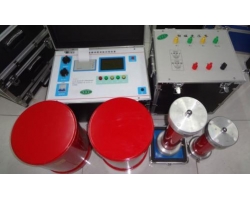

Relay Protection Tester
Introduction
A relay protection tester is a professional device used to verify the performance of relay protection devices in power systems. It simulates various operating conditions in the power system, such as short circuits and ground faults, to test the action characteristics and reliability of protection devices.
Principle
The working principle of a relay protection tester is based on the detection and identification of changes in physical quantities of the protected element under different states. The tester can generate high-precision voltage and current waveforms, simulating normal and fault states of the power system, thereby testing the action threshold, action time, and other related characteristics of protection devices.
Main Functions
Analog Quantity Testing: Can simulate various voltage and current signals to test overcurrent protection, undervoltage/overvoltage protection, directional protection, distance protection, etc.
Non-Electrical Quantity Testing: Can simulate changes in non-electrical quantities such as temperature, pressure, and flow, to test gas protection and temperature protection of power transformers.
Special Tests: Including DC tests, AC/DC tests, AC tests, differential tests, differential harmonic tests, power impedance tests, power direction tests, etc.
Microcomputer Protection Testing: Can conduct line protection, generator-transformer unit protection, and other related tests for microcomputer protection devices, as well as tests for automatic quasi-synchronization devices, standby power supply automatic switching devices, bus differential protection, etc.
Technical Features
High Precision: Uses a high-speed, high-performance digital control processor as the control core, capable of generating high-precision analog signals.
Software Algorithm: Uses double-precision algorithms to generate high-precision waveforms for any phase.
Data Processing: The analog quantities of the power system are input through voltage transformers and current transformers, and after preprocessing and digital filtering, ensure that the computer can accurately calculate and judge.
Flexibility: Can flexibly configure test schemes to meet the testing needs of different types of protection devices.
Usage Method
Connect Test Equipment: Correctly connect the relay protection tester to the protection device under test.
Set Test Parameters: Set parameters such as voltage, current, and frequency according to test requirements.
Start Test Program: Run the test program to simulate normal and fault states of the power system.
Observe Test Results: Record the action behavior of the protection device, such as action time and action value.
Data Analysis: Analyze the test data to evaluate the performance of the protection device.
Application Scenarios
Commissioning of Newly Installed Equipment: Used for debugging and verification of newly installed relay protection equipment.
Periodic Maintenance Inspection: As part of regular maintenance, used to verify the function and performance of existing protection equipment.
Post-Fault Analysis: After a fault occurs, used to analyze the action of protection equipment to determine the cause of the fault.
Technical Training: As a training tool, helps technical personnel understand the working principle and testing methods of protection equipment.
Conclusion
The relay protection tester is an indispensable testing tool in power systems. It ensures the accuracy and reliability of relay protection equipment, thereby ensuring the safe and stable operation of the entire power system.
The above is an overview article about relay protection testers. In actual use, please follow the specific user manual or technical documentation for detailed usage guidelines and technical parameters.