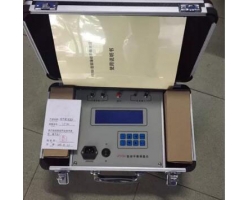

A single-channel partial discharge (PD) tester is an instrument specifically designed to monitor and measure partial discharge activities within electrical equipment. Such devices are typically used in preventive maintenance of high-voltage electrical equipment such as power transformers, cables, and switchgear. Below is a draft article about the single-channel partial discharge tester for your reference:
Single-Channel Partial Discharge Tester: A Powerful Tool for Ensuring Power Equipment Safety
Introduction
Background: With the continuous expansion of the power system scale, ensuring the safety and reliability of power equipment has become particularly important.
Partial Discharge Phenomenon: Introduce the basic concept of partial discharge and its potential hazards to power equipment.
Role of Single-Channel Partial Discharge Tester: Briefly describe the importance of the single-channel partial discharge tester in power equipment maintenance.
Overview of Partial Discharge
Definition: Partial discharge refers to a discharge phenomenon that occurs in high-voltage electrical equipment due to defects in insulating materials, without complete breakdown.
Hazards: Long-term partial discharge can lead to degradation of insulation material performance, ultimately causing equipment failures or even safety accidents.
Working Principle of Single-Channel Partial Discharge Tester
Sensors: Capacitive coupling sensors or other types of sensors are used to capture electromagnetic signals generated by partial discharge.
Signal Processing: The built-in signal processor amplifies and filters the captured signals.
Data Acquisition and Analysis: Software is used for further analysis of the processed signals, including but not limited to time-domain analysis, frequency spectrum analysis, etc.
Features and Advantages of Single-Channel Tester
Portability: Compact size, easy to carry to the site for testing.
Ease of Operation: User-friendly interface, simple operation, no complex setup required to start testing.
Cost-Effectiveness: Compared to multi-channel testers, single-channel testers offer higher cost performance.
Real-Time Monitoring: Capable of displaying test results in real-time, promptly identifying potential partial discharge issues.
Application Scenarios
Power Transformers: Monitor partial discharge conditions in transformer windings, insulating oil, and other parts.
Cable Lines: Inspect the insulation status of cable joints, terminations, and other locations.
Switchgear: Evaluate the condition of insulation components inside switchgear to ensure stable operation of the power system.
Implementation Steps
Preparation: Confirm the test object, select appropriate test locations, and connect sensors.
Data Acquisition: Start the tester and operate according to the instruction manual.
Data Analysis: Use the accompanying software to analyze the collected data and identify partial discharge characteristics.
Result Interpretation and Recommendations: Propose maintenance or repair recommendations based on the analysis results.
Case Study
Case Background: Describe a specific partial discharge testing case.
Testing Process: Detail the process of using the single-channel partial discharge tester.
Data Analysis: Present the results of data analysis and explain their implications.
Conclusion: Summarize the application effectiveness of the tester in this case.
Conclusion
Emphasize the important role of the single-channel partial discharge tester in power equipment maintenance.
Point out the importance of regular partial discharge testing for preventing equipment failures and improving power system safety.
References
List relevant technical standards, research literature, or industry guidelines for reference.
This framework covers the basic information and technical points of the single-channel partial discharge tester. You can adjust and supplement it according to actual needs. I hope this article helps you better understand the single-channel partial discharge tester and its application in power system maintenance.