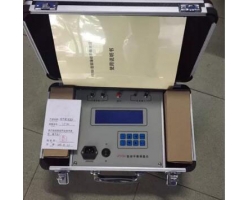

In power systems, the performance and safety of high-voltage electrical equipment are crucial. To ensure these devices operate safely and reliably, rigorous electrical tests must be conducted. As an important high-voltage testing device, the series resonance device is widely used in power system testing, especially in AC withstand voltage tests, where it effectively improves testing efficiency and safety.
What is a Series Resonance Device?
A series resonance device is a piece of equipment used to generate high-voltage AC power at a specific frequency. By adjusting the combination of capacitors and inductors, the circuit reaches a resonant state at a particular frequency, where the impedance is minimized, allowing a higher output voltage to be produced with lower input power. This characteristic makes the series resonance device particularly suitable for withstand voltage tests on high-voltage electrical equipment.
Working Principle
The working principle of the series resonance device is based on the LC series resonant circuit. In the resonant state, the inductive reactance of the inductor L and the capacitive reactance of the capacitor C cancel each other out, making the circuit purely resistive. At this point, by adjusting the power supply frequency or changing the inductance/capacitance values, the circuit can operate at a specific resonant frequency. At this frequency, even with small power input, a high voltage can be generated across the load because the quality factor (Q value) of the circuit is high, meaning energy loss in the circuit is very small.
Main Components
A series resonance device typically includes the following main parts:
Power Supply: Provides the initial AC voltage.
Voltage Regulator: Adjusts the magnitude of the input voltage.
Inductor (L): Provides the inductive component, forming a resonant circuit with the capacitor.
Capacitor (C): Provides the capacitive component, forming a resonant circuit with the inductor.
Load: The high-voltage electrical equipment under test.
Control Unit: Used to monitor and regulate the operating status of the system.
Application Scenarios
Series resonance devices are widely used in testing high-voltage electrical equipment, including but not limited to:
AC Withstand Voltage Tests: Testing the insulation performance of high-voltage cables, transformers, circuit breakers, and other equipment.
Partial Discharge Tests: Detecting whether partial discharge phenomena exist inside electrical equipment and assessing its insulation quality.
Capacitor Bank Tests: Evaluating the overall performance of capacitor banks.
Electromagnetic Compatibility Tests: Ensuring the normal operation of electrical equipment in electromagnetic interference environments.
Main Advantages
High Efficiency: In the resonant state, only a small input power is needed to generate high voltage, saving energy.
Safety: The current in the resonant state is relatively small, reducing risks during testing.
Flexibility: By adjusting the inductance and capacitance, it can adapt to testing needs at different voltage levels.
Portability: Compared to traditional high-voltage power supplies, series resonance devices are smaller in size, making them easy to carry and use on-site.
Usage Precautions
Although series resonance devices have many advantages, the following points should be noted during use:
Safe Operation: Ensure operators have the necessary professional knowledge and skills and follow safety operating procedures.
Correct Configuration: Based on the test object, correctly select the combination of inductance and capacitance to achieve the ideal resonant state.
Environmental Adaptation: Pay attention to factors such as temperature and humidity in the working environment to avoid affecting the accuracy of test results.
Regular Calibration: To ensure the accuracy of test results, the device should be calibrated and maintained regularly.
Technology Development Trends
With the development of power electronics technology and control theory, series resonance devices are also continuously innovating. Future series resonance devices will be more intelligent, integrating advanced digital control technology and data processing capabilities to achieve more precise testing and more efficient operation. Additionally, through integration with IoT technology, remote monitoring and data sharing can be realized, further enhancing the management level of high-voltage electrical testing.
Conclusion
As a key technology in high-voltage electrical testing, the series resonance device provides strong support for power system testing through its efficient, safe, and flexible characteristics. With continuous technological advancement, future series resonance devices will become more intelligent and efficient, better serving the detection and maintenance of power systems.
This article outlines the basic concepts, working principles, and applications of series resonance devices in high-voltage electrical testing. If you need more detailed information or have other specific needs, please feel free to let us know.