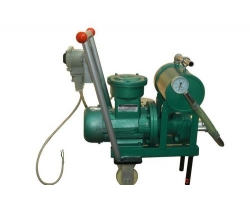

A dielectric loss tester is an instrument used to measure the tangent of the dielectric loss angle (often denoted as tanδ) of insulating materials in electrical equipment. This parameter reflects the degree of energy loss of the insulating material under the action of an alternating electric field and is one of the important indicators for evaluating the insulation performance of electrical equipment. By measuring the tanδ value, it is possible to effectively assess the aging degree, contamination, and potential partial discharge issues of the insulating material.
Working Principle of the Dielectric Loss Tester
The dielectric loss tester applies an alternating voltage to the test object and measures the resulting current, then calculates the tangent of the dielectric loss angle based on the measurement results. This process involves the following steps:
Voltage Application: The tester applies an AC voltage of known frequency and amplitude to the device under test.
Current Measurement: The current through the device under test is measured using a precision current sensor.
Data Processing: The tangent of the dielectric loss angle is calculated based on the phase difference between voltage and current and the magnitude of the current.
Main Functions of the Dielectric Loss Tester
High-Precision Measurement: Provides high-precision tanδ value measurements to ensure the accuracy of test results.
Multi-Frequency Testing: Supports testing over different frequency ranges to accommodate various types of electrical equipment.
Temperature Compensation: Considering the influence of temperature on tanδ values, some high-end testers have temperature compensation functions.
Data Storage and Analysis: Capable of storing large amounts of test data and providing data analysis tools to help users better understand test results.
Application Scenarios
Dielectric loss testers are widely used in various fields of the power system, including but not limited to:
Power Transformers: Used to detect the health status of the transformer oil-paper insulation system.
High-Voltage Cables: Evaluate the aging degree of cable insulation layers.
Motors and Generators: Monitor winding insulation performance to prevent electrical faults.
Capacitors: Check the loss condition of capacitors to ensure they operate at their optimal state.
Instrument Transformers and Other Electrical Equipment: Evaluate the insulation performance of various electrical equipment.
Usage Precautions
Safe Operation: When conducting dielectric loss tests, it is necessary to ensure that the device under test is de-energized and take necessary safety measures.
Correct Wiring: Ensure that test leads are correctly connected to avoid inaccurate test results due to wiring errors.
Environmental Factors: Pay attention to the temperature and humidity of the test environment, as these factors can affect the measurement results of tanδ values.
Regular Calibration: To ensure the accuracy of measurement results, dielectric loss testers need to be calibrated regularly.
Advantages
Early Fault Detection: By conducting regular dielectric loss tests, aging or other potential problems of insulating materials can be detected in a timely manner.
Improved Equipment Reliability: Regular testing and maintenance can enhance the reliability and service life of electrical equipment.
Cost-Effective: Compared to post-failure repairs or equipment replacement, preventive dielectric loss testing is more economically efficient.
Development Trends
With technological advancements, dielectric loss testers are developing towards being more intelligent, more compact, and more portable. Future testers will integrate more functions, such as wireless data transmission and cloud data analysis, providing users with more comprehensive solutions.
Conclusion
The dielectric loss tester is one of the indispensable tools in the maintenance and diagnosis of power systems. By conducting regular inspections of the insulation performance of electrical equipment, power companies can identify problems early and take measures to avoid faults, thereby ensuring the safe and stable operation of the power system. With the development of technology, the functions of such testers will become more complete and their use more convenient.