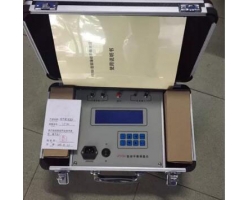

Phase consistency in power systems is one of the fundamentals for ensuring safe and stable operation of the power grid. Especially in high-voltage environments, accurate phase comparison is crucial for the installation, maintenance, and repair of power equipment. Traditional phase verification methods often require direct contact with high-voltage lines, posing certain safety risks. As an advanced detection device, the high-voltage wireless phase verification instrument can complete phase comparison without contact, significantly improving the efficiency of power system maintenance and operational safety.
2. Definition and Functions of High-Voltage Wireless Phase Verification Instrument
The high-voltage wireless phase verification instrument is a device specifically used to detect phase differences between different lines or equipment in high-voltage power systems. It utilizes wireless communication technology to achieve long-distance signal transmission, allowing technicians to accurately perform phase comparison without contacting high-voltage lines. Its main functions include:
Phase Comparison: Detect the phase angle difference between two or more lines to ensure they are in the same phase.
Frequency Measurement: Measure the frequency of the power system to ensure frequency consistency.
Phase Sequence Detection: Determine whether the phase sequence in the power system is correct, i.e., whether the order of phase A, phase B, and phase C conforms to the standard.
Remote Monitoring: Through wireless technology, phase comparison can be performed at a safe distance, avoiding direct contact with high-voltage lines and improving operational safety.
3. Application Scenarios of High-Voltage Wireless Phase Verification Instrument
The high-voltage wireless phase verification instrument is widely used in various aspects of the power system, especially in the following scenarios:
New Substation Construction or Expansion Projects: Before new equipment is connected to the grid, use the phase verification instrument to ensure phase consistency with the existing system, preventing faults caused by phase mismatch.
Power Grid Maintenance and Repair: When performing line switching or equipment maintenance, use the phase verification instrument to check phase consistency, preventing short circuits caused by phase errors.
Power Engineering Acceptance: After the completion of engineering projects, use the phase verification instrument for phase detection to ensure that the project quality meets standards and satisfies safe operation requirements.
Emergency Repair: In the event of a fault requiring urgent handling, quickly verify phases to improve repair efficiency and shorten power outage time.
4. Working Principle and Technical Features of High-Voltage Wireless Phase Verification Instrument
The high-voltage wireless phase verification instrument mainly relies on the following technologies to achieve its functions:
Wireless Communication Technology: Transmit phase information through wireless signals, avoiding the danger of direct contact with high-voltage lines in traditional methods.
High-Frequency Signal Detection: Use high-frequency signals as references to improve the accuracy and reliability of phase comparison.
Digital Signal Processing: Utilize digital signal processing technology to analyze phase information, ensuring data accuracy and real-time performance.
High-Sensitivity Sensors: Equipped with high-sensitivity sensors to accurately capture signals even in complex electromagnetic environments.
5. Operation and Usage Points
When using the high-voltage wireless phase verification instrument, the following steps should be followed:
Preparation: Ensure the instrument and its accessories are intact and the battery is fully charged.
Set Parameters: Set test parameters according to the actual situation, such as frequency range.
Connect Probes: Place the test probes on the lines or equipment that need phase verification.
Read Data: Start the instrument, read the displayed phase information, and record it.
Analyze Results: Based on the phase angle, frequency, and other data provided by the instrument, determine phase consistency and ensure correct equipment connection.
6. Selection and Maintenance Recommendations
When selecting a high-voltage wireless phase verification instrument, the following points should be noted:
Accuracy and Reliability: Choose products with high accuracy and reliability to ensure accurate test results.
Applicable Range: Consider the voltage level of the instrument to ensure it is suitable for the specific working environment.
Ease of Operation: Choose devices with user-friendly interfaces that are easy to operate, reducing operational difficulty.
After-Sales Service: Choose brands that provide good after-sales service and technical support to ensure long-term use without worries.
7. Future Prospects
With technological advancements, future high-voltage wireless phase verification instruments will become more intelligent and integrated. For example:
Intelligent Diagnosis: Combine artificial intelligence technology to automatically identify phase errors and provide solutions.
Remote Operation: Control the instrument remotely through mobile devices to improve work efficiency and reduce operational risks.
Data Sharing: Upload test data to the cloud to achieve information sharing across multiple departments and locations.
Multi-Function Integration: Integrate phase verification functions with other detection functions into one device, simplifying operation processes and improving detection efficiency.
By properly using the high-voltage wireless phase verification instrument, power enterprises can significantly improve the synchronization and safety of the power system, ensuring stable operation of the power grid and providing users with more reliable power services.