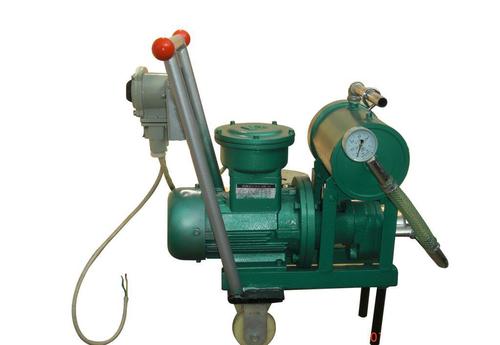

Series resonance device is an important technology in the field of modern power testing. It utilizes the principle of series resonance to generate high voltage for testing the insulation performance of high-voltage electrical equipment. This article will detail the working principle, main applications, and advantages of series resonance devices in practical operation.
Working Principle
The series resonance device mainly consists of the following parts:
Power Supply: Provides the necessary power for the entire system.
Voltage Regulator: Adjusts the input voltage to control the magnitude of the output voltage.
Excitation Transformer: Steps up the voltage output from the voltage regulator to a certain level.
Resonant Reactor (L): Forms a resonant circuit together with the capacitance (C) of the test object.
Test Object (C): The high-voltage electrical equipment to be tested, whose inherent capacitance is part of the resonant circuit.
When the system is in a resonant state, the reactance of the reactor (L) and the test object (C) cancel each other out, making the inductive and capacitive reactance in the circuit equal, thereby generating a very high voltage across the test object. This characteristic allows the series resonance device to produce high voltage output at a lower power supply voltage while maintaining a relatively low test current.
Application Fields
Series resonance devices are widely used in multiple fields, especially in the testing of high-voltage electrical equipment:
Power Cable Withstand Voltage Test: Used to detect the insulation strength of cables, ensuring their reliability in actual operation.
Transformer Withstand Voltage Test: Tests the insulation performance between transformer windings, ensuring the normal operation of equipment under high voltage conditions.
Instrument Transformer Withstand Voltage Test: Verifies the insulation performance of instrument transformers under high voltage, ensuring their accuracy and safety.
Testing of High-Voltage Switchgear: Such as circuit breakers, disconnectors, etc., used to evaluate the operational performance of equipment under high voltage conditions.
Advantages and Features
Compared to traditional high-voltage testing methods, series resonance devices have the following significant advantages:
Economy: It can generate the required high voltage at a lower supply voltage, reducing the cost of power equipment.
Safety: The test current is relatively small, reducing the risk to operators.
Portability: The equipment is compact and easy to carry for on-site testing.
Accuracy: The output voltage can be precisely controlled, improving the accuracy of test results.
Adaptability: It can adapt to test objects with different capacitance values, suitable for testing various high-voltage electrical equipment.
Conclusion
With its unique technical advantages, the series resonance device plays an important role in high-voltage electrical testing. With continuous technological advancement, series resonance devices will become more efficient and reliable, providing solid support for the safe operation of power systems.
We hope this article helps you better understand the working principle of series resonance devices and their importance in power testing. If you have any specific questions or need further information, please feel free to let us know.