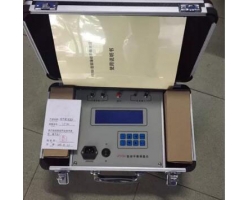

Relay protection testers are key equipment in power systems used to detect and verify the performance of relay protection devices. Such instruments assist technical personnel in ensuring that relay protection systems correctly respond to abnormal conditions in the power network during installation, commissioning, maintenance, and fault troubleshooting. Below is an overview of an article about relay protection testers, covering basic information, working principles, application scenarios, and development trends of this equipment.
Overview of Relay Protection Testers
Definition and Functions
A relay protection tester is a specialized instrument used for testing the performance of relay protection devices (such as circuit breakers, relays, etc.) in power systems. It can simulate various fault conditions in power systems, such as short circuits, overloads, voltage loss, etc., and verify whether the actions of protection devices meet expectations.
Importance
Relay protection testers play a crucial role in the safe operation of power systems. Regular testing ensures the reliability of relay protection devices, thereby protecting power equipment from damage and ensuring the continuity of power supply.
Working Principles
Testing Methods
Relay protection testers typically use the following testing methods to inspect the working status of protection devices:
Analog Testing: Outputs analog current and voltage signals to simulate various operating conditions in power systems.
Digital Testing: Uses digital signals to simulate input signals of protection devices, testing their logic judgment capabilities.
Dynamic Testing: Conducts dynamic tests in real or simulated power system environments to observe the action behavior of protection devices.
Operating Procedures
Preparation Phase: Set test parameters, including current, voltage, frequency, etc.
Executing Tests: Start the test program to simulate fault conditions in power systems.
Recording Data: Collect action data of protection devices, such as action time, current values, etc.
Analyzing Results: Evaluate whether the actions of protection devices meet predetermined standards.
Application Scenarios
Relay protection testers are widely used in various parts of power systems:
Power Plants: Used for testing protection devices of generators, transformers, and other equipment.
Substations: Used for detecting relay protection systems of transmission lines, busbars, and other facilities.
Distribution Networks: Used for protection testing of low-voltage distribution systems in urban power grids.
Usage Precautions
Safety First: Safety regulations must be followed during testing to ensure personal safety.
Accurate Parameter Setting: Set test parameters reasonably according to actual conditions to avoid misoperation.
Regular Calibration of Instruments: Ensure the accuracy of the tester itself by performing regular calibration and maintenance.
Complete Data Recording: After testing, save complete test records for subsequent analysis.
Development Trends
With the improvement of power system automation and technological progress, relay protection testers are also continuously developing:
Intelligence: Integrating more advanced sensing technologies and data analysis algorithms to achieve remote monitoring and intelligent diagnosis.
Portability: Smaller size and lighter weight for easy carrying and on-site operation.
Multifunctionality: In addition to traditional testing functions, adding data analysis, fault simulation, and other functions.
Compatibility: Supporting multiple communication protocols to seamlessly connect with relay protection devices of different brands and models.
In summary, relay protection testers are key technical tools for ensuring the reliability of relay protection devices in power systems. With continuous technological advancement, future relay protection testers will become more intelligent and portable, better serving the safe and stable operation of power systems.