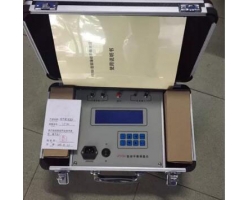

It is mainly used for withstand voltage tests and partial discharge measurements of high-voltage electrical equipment. By adjusting circuit parameters, this type of device enables the circuit to reach a resonant state at a specific frequency, thereby generating high voltage without the need for large high-voltage transformers. Below is an article about series resonant devices, covering their basic concepts, working principles, application scenarios, and usage precautions.
Overview of Series Resonant Devices
Definition and Function
A series resonant device is a test equipment that utilizes the principle of series resonance to generate high voltage. It is mainly used for withstand voltage tests and partial discharge measurements of high-voltage electrical equipment in power systems (such as cables, transformers, circuit breakers, etc.). By generating high voltage to simulate the working conditions of equipment in actual operation, it verifies the insulation performance and withstand voltage level of the equipment.
Importance
High-voltage electrical equipment in power systems must be able to withstand high voltage without failure. Therefore, regular withstand voltage tests using series resonant devices are necessary measures to ensure equipment reliability and safety. Additionally, partial discharge measurements can detect potential defects in equipment early, preventing accidents.
Working Principle
Resonance Conditions
The working principle of a series resonant device is based on the characteristics of a series resonant circuit. When the inductance (L) and capacitance (C) in the circuit reach a resonant state at a specific frequency, the circuit exhibits purely resistive characteristics. At this point, the voltage and current in the circuit are in phase, and the voltage can be amplified to be much greater than the power supply voltage.
Components
A series resonant device typically consists of the following parts:
Power supply: Provides the excitation voltage.
Inductor (L): Usually composed of one or more adjustable inductor coils, used to adjust the resonant frequency of the circuit.
Capacitor (C): Connected in parallel or series with the test object to form a resonant loop.
Test object (XL): The electrical equipment that requires withstand voltage testing or partial discharge measurement.
Measurement and control system: Used to monitor parameters such as voltage and current in the circuit, and to control the working state of the circuit.
Operation Procedure
Connect the circuit: Connect the inductor, capacitor, and test object as required.
Adjust parameters: Adjust the values of the inductor and/or capacitor to achieve a resonant state in the circuit.
Start the power supply: Start the power supply and gradually increase the excitation voltage until the required test voltage is reached.
Monitor data: Monitor parameters such as voltage and current in the circuit through the measurement and control system.
Record results: Record test data to evaluate the insulation performance and withstand voltage level of the test object.
Application Scenarios
Series resonant devices are widely used in multiple fields of power systems:
Cable withstand voltage testing: Used to test the insulation performance of high-voltage cables.
Transformer withstand voltage testing: Ensures the insulation strength of transformers under high voltage.
Partial discharge measurement: Detects partial discharge phenomena in high-voltage electrical equipment and assesses the health status of the equipment.
Power equipment maintenance: Used to evaluate the insulation performance of equipment during regular maintenance and overhaul.
Usage Precautions
Safety first: When using series resonant devices, it is necessary to ensure the safety of operators and take necessary protective measures.
Correct connection: Strictly follow the instructions to connect the circuit, ensuring correct and error-free connections.
Parameter setting: Set the parameters of the inductor and capacitor according to the specific requirements of the test object to achieve the optimal resonant state.
Monitor data: During the test, closely monitor parameters such as voltage and current in the circuit to avoid overvoltage or overcurrent damaging the equipment.
Complete records: Record test data in detail, including test date, time, environmental conditions, test results, etc., for future reference.
Development Trends
With technological advancements, series resonant devices are also continuously developing:
Intelligence: Integrating advanced sensor technology and intelligent control systems to achieve remote monitoring and automated management.
Portability: Designing more compact and lightweight devices for easy portability and on-site operation.
Multifunctionality: In addition to basic withstand voltage testing functions, other functions such as partial discharge measurement and fault diagnosis have been added.
High precision: Adopting more advanced measurement techniques and algorithms to improve measurement accuracy and reliability.
In summary, series resonant devices, as key tools for ensuring the reliability of high-voltage electrical equipment in power systems, play an important role in withstand voltage testing and partial discharge measurement. With continuous technological progress, future series resonant devices will become more intelligent, portable, and have higher measurement accuracy, better serving the application needs of various industries.