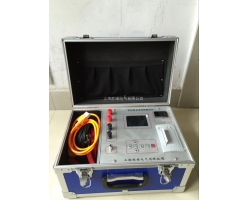

Overview of Series Resonant Devices
Working Principle
Basic Concept: A series resonant device utilizes a series combination of inductance (L) and capacitance (C) to form a resonant state at a specific frequency. When the power supply frequency matches the natural frequency of the LC circuit, high voltage or current is generated in the circuit.
Implementation Methods:
Variable Frequency Power Supply: Achieves resonance by changing the power supply frequency.
Fixed Frequency Power Supply: Uses a fixed frequency power supply and achieves resonance by adjusting the inductance or capacitance values.
Automatic Tuning: Modern devices are typically equipped with automatic tuning functions to quickly find the resonant point.
Types
Portable Series Resonant Devices: Small size, light weight, suitable for on-site rapid testing, usually with built-in power supply.
Benchtop Series Resonant Devices: Suitable for laboratory environments, offering higher precision and more functional options.
Multi-functional Integrated Devices: In addition to basic resonant functions, they also have data recording, analysis, and other functions, forming a complete testing solution.
High Voltage Series Resonant Devices: Specially designed for testing high-voltage equipment such as large transformers and cables.
High Current Series Resonant Devices: Suitable for applications requiring high current testing, such as generators and motors.
Application Areas
Power Industry: Conducting withstand voltage tests on transformers, cables, switchgear, etc., to ensure their insulation performance meets standards.
Scientific Research: Conducting high-voltage experiments in fields such as materials science, physics, and chemistry to study the electrical properties of materials.
Medical Equipment: Used in high-voltage power supplies for medical imaging equipment such as X-ray machines and CT scanners.
Aerospace: Conducting high-voltage tests on avionics equipment to ensure their reliability under extreme conditions.
Environmental Monitoring: Used in high-voltage power supplies for environmental protection equipment such as electrostatic precipitators and air purifiers.
Industrial Production: Applied in equipment testing in fields such as plastic processing, chemical processes, and food processing.
Advantages
High Efficiency and Energy Saving: In the resonant state, reactive power in the circuit is greatly reduced, improving energy conversion efficiency.
High Precision: Modern series resonant devices use advanced sensing technology and data processing systems to provide highly accurate test results.
Easy Operation: Most models are equipped with user-friendly interfaces and automatic tuning functions, simplifying the operation process.
Versatility: Some advanced models have additional functions besides basic testing, such as data recording and analysis.
Good Safety: Equipped with overload protection mechanisms and other safety measures to ensure the safety of operators.
Usage Precautions
Correct Wiring: Strictly follow the instructions to connect all lines, ensuring good contact and no risk of short circuits.
Environmental Conditions: Keep the testing environment dry and clean, away from strong magnetic field interference.
Temperature Control: Pay attention to the impact of temperature changes on test results, and take constant temperature measures if necessary.
Regular Calibration: To ensure data accuracy, the instrument should be regularly sent to the manufacturer or professional institutions for calibration.
Comply with Safety Regulations: When working in high-voltage environments, appropriate safety protection measures must be taken, such as wearing insulating gloves and boots.
Warm-up Time: Some high-end instruments require a certain warm-up time to achieve optimal performance; please refer to the recommendations in the manual.
Data Analysis: Carefully analyze test results, identify and solve problems in a timely manner, ensuring the safe and reliable operation of equipment.
Conclusion
Series resonant devices are one of the indispensable important tools in power system maintenance, scientific research, and technological development. They not only provide high voltage or high current output but also have multiple protection functions to ensure operational safety and result accuracy. With the development of technology, future series resonant devices will become more intelligent and portable, providing users with more convenience. Correctly selecting the appropriate series resonant device and mastering the correct usage methods are crucial for obtaining reliable test results.
I hope this article can provide you with a comprehensive understanding of the basic knowledge and importance of series resonant devices. If you have any specific questions or want to learn more details, please feel free to tell me!