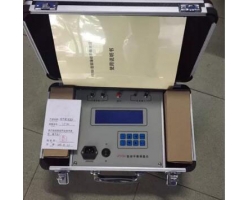

It uses wireless communication technology to safely and accurately determine whether the phases of two or more power sources are consistent without directly contacting high-voltage lines. This instrument is of great significance for ensuring the safe operation of power systems and preventing accidents caused by misoperation. Below is an overview of an article about high-voltage wireless phase verification instruments, including their working principles, types, application fields, and usage precautions.
Overview of High-voltage Wireless Phase Verification Instrument
Working Principle
Basic Concept: The high-voltage wireless phase verification instrument uses wireless signal transmission technology to exchange data between two or more points, thereby determining the voltage phase relationship between the points.
Measurement Method: Each test point is equipped with a transmitter and a receiver. The transmitter is connected to the tested line, collects voltage signals, and converts them into wireless signals for transmission; the receiver receives these signals and calculates the phase difference through internal algorithms. Modern devices typically can simultaneously display real-time voltage values, frequency, and phase angle information.
Types
Handheld: Compact and portable, suitable for rapid on-site detection, widely used in power maintenance work.
Fixed Installation: Suitable for occasions requiring long-term monitoring of phase relationships, such as key nodes in substations.
Multi-channel System: Can compare phases of multiple points simultaneously, suitable for complex power network structures.
Application Fields
Power Grid Maintenance and Repair: During the process of restoring power after an outage, ensure that newly connected lines match the phase of the original lines.
Commissioning of New Projects: Verify the correctness of wiring for newly installed transformers, switchgear, and other equipment.
Fault Troubleshooting: Help identify power faults caused by phase errors.
Safety Inspection: Regularly check the safety status of power facilities to prevent safety hazards caused by phase inconsistency.
Advantages
High Safety: No need to directly contact high-voltage live parts, greatly reducing the risk to operators.
Reliable Accuracy: Advanced wireless technology and precision sensors ensure the accuracy of measurement results.
Easy Operation: Most models have an intuitive user interface, making them easy to use.
Multifunctionality: In addition to phase verification, some advanced devices also have functions such as voltage measurement and frequency analysis.
Usage Precautions
Correct Settings: Choose the appropriate range and mode according to the actual situation to ensure the instrument is in the best working condition.
Environmental Conditions: Avoid using in environments with strong electromagnetic interference to prevent affecting measurement results.
Battery Management: Regularly check battery level to ensure sufficient power to complete the entire measurement process.
Calibration and Maintenance: Regularly calibrate the equipment to maintain its measurement accuracy; also pay attention to cleaning and maintenance to extend its service life.
Follow Safety Regulations: Even when using a wireless phase verification instrument, all relevant electrical safety regulations should be followed, and necessary personal protective equipment should be worn.
Conclusion
The high-voltage wireless phase verification instrument is one of the indispensable safety tools in the power industry. It not only improves work efficiency but also ensures the personal safety of operators. With technological advancement, future wireless phase verification instruments will become more intelligent and integrated, providing users with more comprehensive services. Correctly selecting appropriate equipment and mastering proper usage methods are crucial for ensuring the stable operation of the power system.
I hope this article can provide you with a comprehensive understanding of the basic knowledge and importance of high-voltage wireless phase verification instruments. If you have any specific questions or want to learn more details, please feel free to tell me!