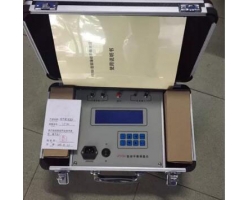

The dual-channel digital partial discharge detector is a test device that integrates modern digital signal processing technology and is widely used in preventive maintenance in the power industry. With the continuous development of the power system and higher requirements for equipment reliability, the role of such detectors has become increasingly important. This article will detail the working principle, characteristics, application fields, and future development trends of the dual-channel digital partial discharge detector.
Working Principle
The basic working principle of the dual-channel digital partial discharge detector is to use pulse current as a medium to detect partial discharge phenomena through effective collection of discharge phase information. The instrument typically includes two independent channels, each capable of independently collecting, processing, and displaying partial discharge signals. This allows technicians to receive signals from different locations or different types of sensors simultaneously, thereby achieving a more comprehensive diagnosis.
The specific detection process is as follows:
Signal Acquisition: Capture the pulse current generated by partial discharge through coupling capacitors or sensors.
Signal Preprocessing: Amplify the signal using a low-noise amplifier and perform preliminary filtering.
Signal Processing: Convert analog signals to digital signals using a high-speed ADC, then process them using DSP.
Data Analysis: Analyze the signal through complex algorithms to identify the type and severity of partial discharge.
Result Display: Present the waveform, frequency distribution, and other information of discharge pulses graphically on the display screen.
Data Storage: Save detection results for subsequent analysis.
Main Features
Dual-Channel Synchronous Detection: Two independent channels can sample, process, and display data synchronously, improving detection efficiency.
High Sensitivity and Wide Bandwidth: High detection sensitivity, capable of covering a wide range of sample capacitance, with diverse frequency band combinations.
Multiple Display Modes: Supports various display modes such as elliptical, linear, and sinusoidal, facilitating intuitive understanding of discharge characteristics.
Intelligent Positioning Function: Can perform electrical or electro-acoustic positioning analysis for partial discharge in transformers or high-voltage electrical equipment.
Data Management: Equipped with data storage functions, convenient for users to query and analyze historical data.
Easy Operation: User-friendly interface and simple operation, suitable for on-site work.
Application Fields
The dual-channel digital partial discharge detector is suitable for power equipment of various voltage levels and capacities, including but not limited to:
Transformers: Used to detect partial discharge in oil-immersed and dry-type transformers.
Instrument Transformers: Used to detect partial discharge in current transformers and voltage transformers.
Generators: Used to detect partial discharge in large generator windings.
Surge Arresters: Used to detect partial discharge conditions in surge arresters.
Bushings: Used to detect partial discharge in power transformer bushings.
GIS (Gas-Insulated Switchgear): Used to detect partial discharge in GIS equipment.
Capacitors: Used to detect partial discharge in power capacitors.
Power Cables: Used to detect partial discharge in cable joints and terminations.
Switchgear: Used to detect partial discharge in high-voltage switchgear.
Future Development
With the continuous advancement of the power system and technological development, the dual-channel digital partial discharge detector will also undergo new transformations. Future trends include:
Higher Integration: Integrating more functions into a portable device.
Intelligent Analysis: Using artificial intelligence and machine learning technologies to automatically identify partial discharge types.
Remote Monitoring: Combining IoT technology to achieve remote data transmission and real-time monitoring.
Enhanced Data Analysis Capabilities: Providing more in-depth data analysis tools to help technicians make more accurate judgments.
Conclusion
The dual-channel digital partial discharge detector is an important tool for preventive maintenance in the power industry, and its widespread application helps improve the safety and reliability of power equipment. With technological progress, the functions of such detectors will become more abundant and their use more convenient, playing an even more critical role in the maintenance and fault diagnosis of power systems.